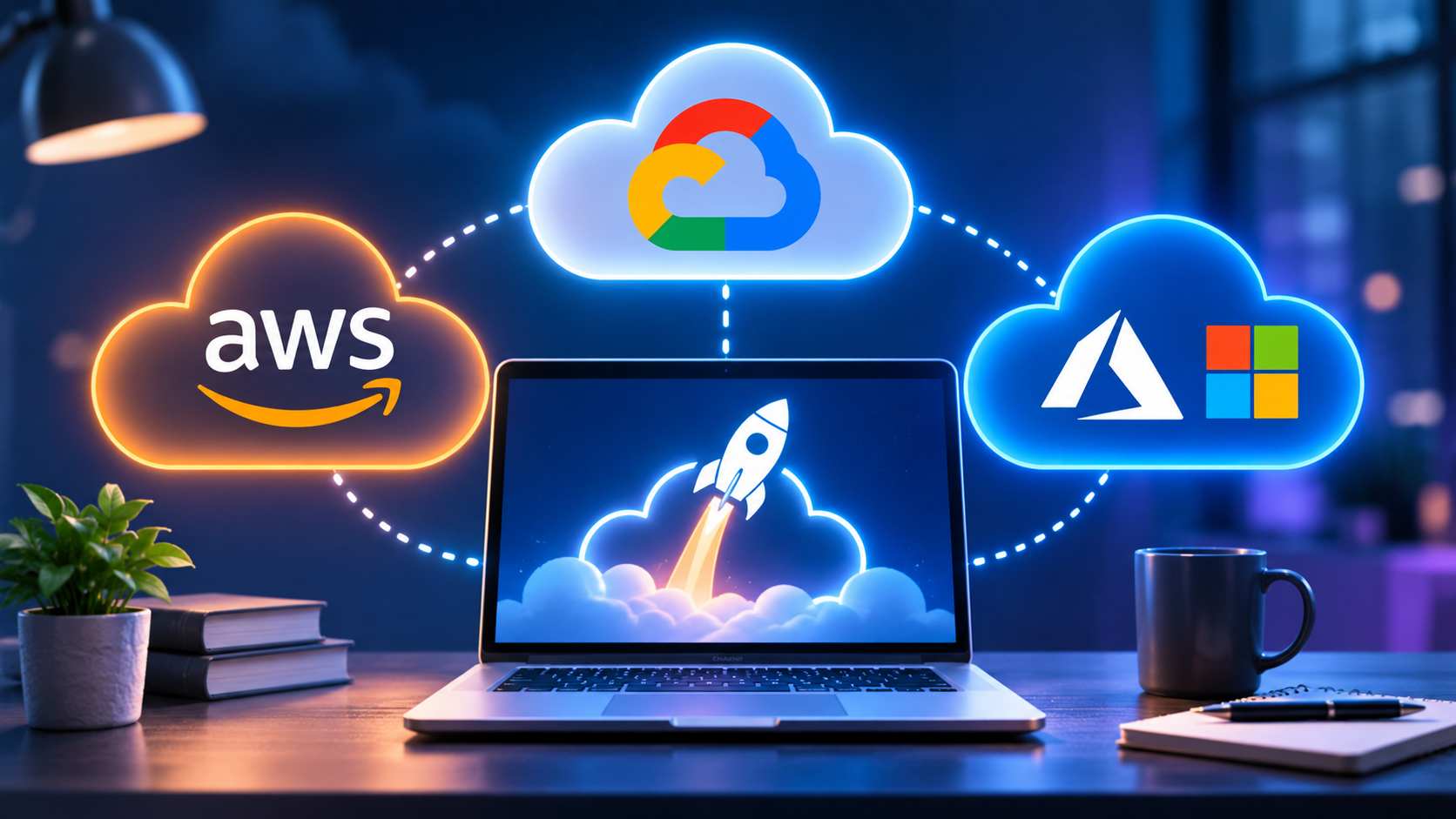
AI-generated illustration
Cloud bills quietly kill early startups. Our startup founder’s guide lists them as a cost people underestimate, and honestly, I think that’s still putting it mildly. A few thousand dollars a month is pocket change for a funded team. For a founder paying from their own account, it’s rent. That’s why free credit programs matter so much and why you should read their rules before you get excited.
One thing up front. I haven’t used these programs myself, so everything here comes from published terms and independent comparisons. Terms change a lot. Check the numbers on each provider’s own page before you build a budget around them.
What are AWS startup credits and how does AWS Activate work?
AWS Activate is Amazon’s startup program. If you’ve searched for AWS startup credits, AWS credit for startups, or the AWS startup program, this is what you were looking for. The credits come in tiers, and the size of yours depends on whether someone outside your company vouches for you.
An independent comparison of startup credit programs breaks it down like this. The Founders tier gives up to $5,000 and is self-serve, so bootstrapped teams can apply alone. The Portfolio tier goes up to $200,000, but you need an organization ID from an approved provider like a venture firm, accelerator or incubator. There’s also an invite-only AI tier that starts at $200,000. You generally need to be pre-Series B and founded within ten years. Credits usually expire in one to two years.
Short version: AWS Activate the credits track who backs you. Bootstrapped? Expect a small amount. Backed by an accelerator? Ask about the Portfolio tier first, because that’s where the real money sits.
What does the Google Cloud startup program offer?
The Google for Startups Cloud Program covers most Google Cloud startup credits and Google startup credits. It has three tracks. Start gives up to $2,000 to early tech startups founded in the last 24 months. Scale gives up to $200,000 over two years, with $100,000 in year one, and it needs institutional equity funding. There’s also an AI-first version of up to $350,000 for teams building on Vertex AI or Gemini.
Funding is where people get caught. The same comparison says SAFEs count. Angel money doesn’t. Neither do friends and family, crowdfunding or grants, which surprised me a bit. Credits expire after two years.
So if you’re chasing Google Cloud credits for startups, sort out your funding status before you apply. Raising a first round? Our guide to pre-seed to Series E funding shows which investors usually unlock these tiers.
What does Microsoft for Startups give you?
Microsoft does it differently. You don’t fill in one application and wait. Credits unlock as you hit usage milestones.
The comparison lists $200 at signup, then $5,000 after business verification. Bigger steps go up to $150,000 as you run more workloads and spend more each month. Startups that come through an investor network often start near $100,000.
The catch is obvious. Bigger tiers need real usage. That works nicely if you already know you’re building on Azure. If you don’t, it’s a much weaker deal.
What does the Anthropic startup program offer?
AI credits are a category of their own now. TechRadar reported that Anthropic’s expanded Claude startups program offers up to $7,000 in value, including $1,000 in API credits and a free year of Claude Team. The API credits are one-time and run out six months after approval. The Team plan only works for companies new to Claude Teams.
To qualify, you need to be founded within five years or funded within two. Investors can unlock bigger partner offers too. If your product runs on a model API, this could cover your first few months of spend. Not forever, but a few months matters early on.
Is Startup School 2026 worth your time?
Startup School is Y Combinator’s free program for founders. It started in 2017 as an online course. TechCrunch described the relaunch as a continuous, year-round program with on-demand lessons, founder content and a peer forum. It’s free from the idea stage onward.
YC has also promoted an in-person Startup School event for 2026, with an application. I couldn’t confirm the details, so check startupschool.org for the current format and dates.
My take, for what it’s worth: yes, if you’re pre-launch and want structure. It won’t hand you cloud credits. Still, it’s a decent first stop among all the startup schools and programs out there.
How do I get approved for startup credits?
Approval mostly comes down to looking like a real company. Do these before you apply.
- Register a business entity and domain. A professional email address and a live website help more than you’d think.
- Join an accelerator or incubator. Many tiers depend on a partner referral.
- Describe your product clearly. Say what you’re building and why it needs compute.
- Apply to several programs. Credits from different providers don’t usually conflict.
What should you watch out for with cloud credits?
Credits aren’t free money, whatever the landing page says. They expire. They usually cover only certain services. And they can hide a bad architecture. A product that costs $4,000 a month on credits will cost $4,000 a month in cash next year.
Plan for the day they end. The Amazon startup program and its rivals all work this way. Track spend by service and set billing alerts. Keep your setup portable where you can. Billing infrastructure for startups doesn’t need to be fancy, but you should know which line items double when you grow.
Security is the other trap. Free compute is easy to misconfigure, so read our notes on cloud-native security practices before launch.
What other startup tools and money help early on?
Startup tools are cheaper than they used to be. Plenty of vendors give young companies free tiers. The best OKR software for startups is whichever one your team actually updates, and it only starts to matter once you have more than three people. Pick one tool. Use it. Don’t trial five.
Be careful with any startup business credit card promising guaranteed approval. No real lender can promise that, and new founders are a favorite target for predatory offers.
Curious where AI startups raise and spend? See our list of the hottest AI startups.
Frequently Asked Questions
It ranges from about $5,000 for self-serve founders to $200,000 or more through a partner or invite-only AI program, per a third-party comparison. Check AWS for current terms.
For the small Start tier, no. The larger Scale tier needs institutional equity funding, and SAFEs count.
Usually yes, since they’re separate companies. Moving workloads between clouds is the hard part.
Yes. Most expire within one to two years. Some, like the Anthropic API credits, last only six months.
Applying is free. You get credits against your AWS bill, and the amount depends on your tier.
Yes. Y Combinator’s Startup School has been free since it opened to all founders.
What to do next
Here’s the thing: apply early, apply widely, and read the fine print. Use credits to buy time, not to dodge unit costs. The founders who gain most are the ones who plan for the bill after the credits run dry.