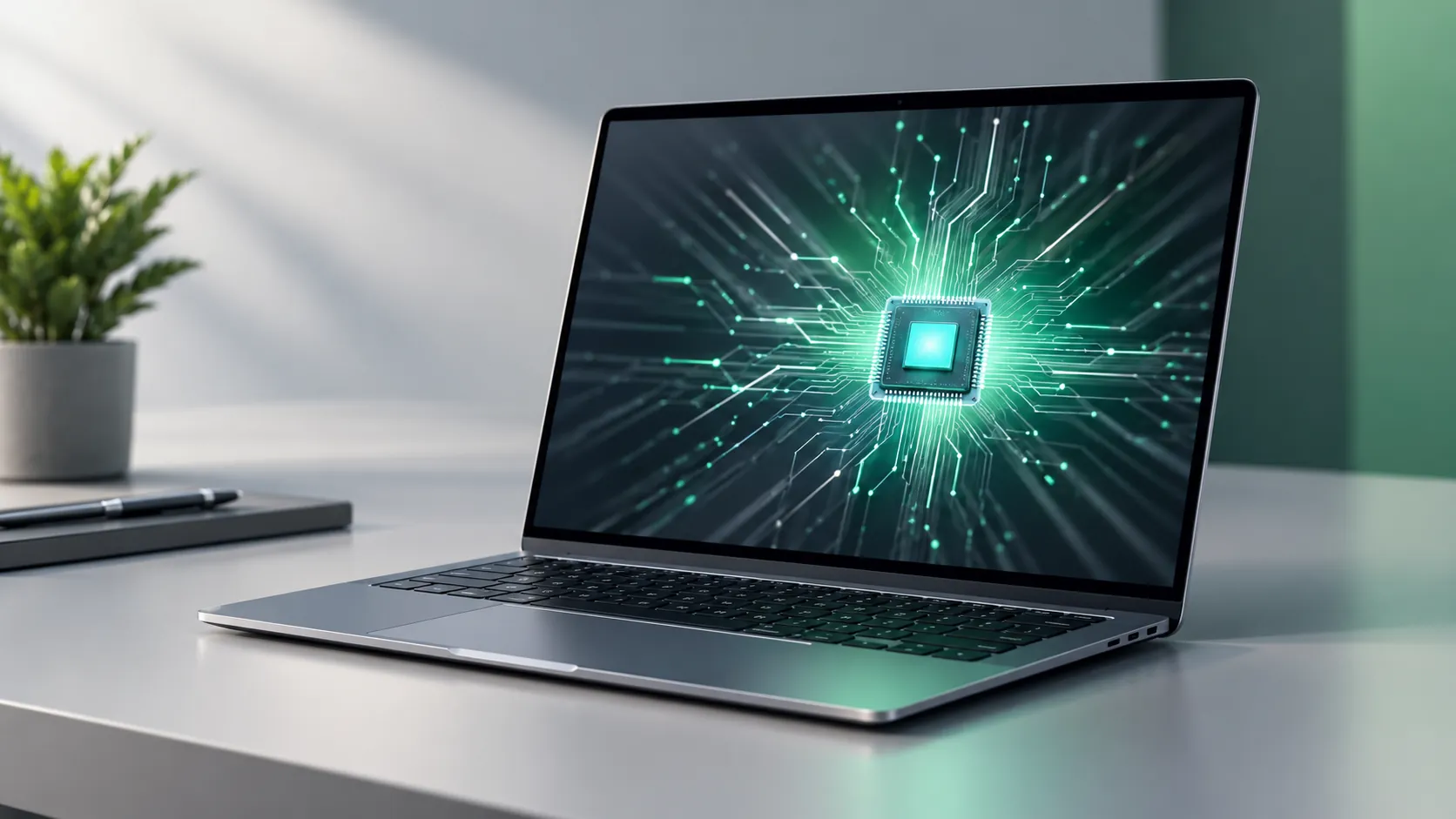
AI-generated illustration
Nvidia’s RTX Spark laptops are on sale now. Nvidia first showed the platform at Computex in Taipei in June. The company’s newsroom confirms that the PCs are available today. Tom’s Hardware reports starting prices of $2,599 across several models. The Surface Laptop Ultra is one of them. Six hardware brands offer the platform. That makes this one of the biggest Windows hardware launches this year. It brings a new chip architecture to mainstream buyers.
Inside the N1X Platform
The processor centers on the N1X superchip. Nvidia developed it with MediaTek, and Microsoft is a development partner. The chip pairs a 20-core Arm-based Grace CPU with a 6,144-core Blackwell GPU. Reported specifications include about 70 billion transistors on TSMC’s 3-nanometer process. Independent tests will confirm those numbers. The chip reaches up to one petaflop of FP4 AI performance. It supports up to 128 gigabytes of unified memory. Memory bandwidth reaches up to 300 gigabytes per second.
Unified memory matters for AI work. The CPU and GPU share one memory pool. That setup can help with large AI models that would otherwise need to be split across separate memory.
Local AI as the Pitch
Nvidia pitches the platform as a way to run AI agents on personal devices. That focus sets RTX Spark apart from earlier Windows on Arm efforts. Those efforts mostly promoted battery life and portability. Nvidia’s message centers on local AI. Assistants, models, and agent tools run on the laptop itself. Earlier coverage described the platform as aimed at premium Windows PCs and desktops. The $2,599 starting price confirms that placement. Users who run assistants all day will notice performance and battery life most.
Compatibility Questions
Buyers should think about compatibility first. Windows on Arm has a mixed record with older x86 apps and drivers. A new chip architecture adds more uncertainty for games and specialized software. Nvidia’s announcement highlights local AI models, agent tools, and games. Check your critical software before you buy. Reviews that test real workloads will show how the platform performs. Look for gaming tests, battery life under load, and software compatibility results. Gamers should also check driver support, since game publishers and graphics drivers set the pace for compatibility. Early buyers should expect some rough edges in the first months.
Price and Privacy Trade-Offs
The starting price of $2,599 sits well above mainstream Windows laptops. Buyers who want AI features may compare that cost with cloud AI subscriptions. A subscription costs far less each month, but it sends prompts and data off the device. Local hardware keeps that data on the machine, which matters for privacy-minded users. The right choice depends on how often a person runs AI tasks and how sensitive that work is.
Who Should Consider It
Creators and developers who run local models may find the most value here. Students and general users may not need this level of AI hardware. The starting price puts the platform out of reach for many buyers. Anyone shopping in this range should compare it with current Windows laptops that use x86 chips from Intel and AMD. Compare battery life, display quality, and warranty terms too.
What to Watch
For Technwz readers, the bigger question is whether Nvidia can create a new category of Windows PCs. If local AI becomes a common reason to buy a laptop, chipmakers that set the performance baseline will shape the market. Buyers should wait for independent reviews before they commit. Early adopters take on more risk. They should also watch for price changes across the six brands. Choose a laptop based on the software you actually use. Nvidia also needs developers to build native apps for the platform. Watch which major software makers announce native support in the coming months. Early software reviews will matter more than the spec sheet.
Related on Technwz: Apple M6 MacBook Pro and iMac: Prices, Dates, and Specs
Sources: Nvidia Newsroom, Tom’s Hardware