

There is a kid in my neighborhood who streams himself playing games for an audience of about 400 people every weekend. He is 17. His parents think it is a phase. I am not so sure. Because that same thing, scaled up by a factor of a few million, is basically how the gaming industry spent the last decade rewriting its rulebook.
Between 2015 and 2025, the changes were not just big. They were the kind of changes that make you look back and wonder how the industry ever worked the way it used to. New money came in from directions nobody expected. Old assumptions about who plays games, how they pay for them, and what counts as a gaming platform got quietly dismantled one by one. Some of the most important shifts happened in places the mainstream press barely noticed at the time.
This piece tries to cover all of it, or at least the parts that actually mattered.
The numbers grew. Obviously. But look at which numbers.
The headline figure is straightforward enough. The global gaming market was worth somewhere around $91 billion in 2015. By 2024 it had climbed to roughly $184 billion, per Newzoo. So yes, it roughly doubled. That is impressive by any standard.
But the revenue figure is one of the least compelling parts of the story. The number that really changes how you think about the decade is the player count. Around 1.8 billion people played video games in some form in 2015. By 2025, that figure will sit north of 3.3 billion. More than four in ten people on the planet are affected. It’s a statistic that sounds made up until you think about who those people are.
Because here is the thing: The average age of a gamer in the US is around 31. Not 16. Not 22. Thirty-one. And close to half of all players globally are women. The image of gaming as something teenage boys do in basements started dying in the early 2020s, and by mid-decade it had basically disappeared. Gaming became like watching television, something nearly everyone does and almost nobody thinks about.
That demographic shift did not happen by accident, and it did not happen because console gaming suddenly got more popular. It happened almost entirely because of mobile technology.
Mobile Changed Everything and Most People Still Underestimate It
Look, mobile gaming used to be easy to dismiss. Angry Birds and Candy Crush are simple games you can tap on while waiting for a bus. That reputation died somewhere around 2018 and was completely buried by 2020, but a surprising number of people in the industry were slow to update their assumptions.
By 2025, mobile accounts for close to 49% of total global gaming revenue. That is not a secondary platform. That is half the industry. And it got there not by taking players away from consoles or PCs but by finding entirely different people who were never going to buy dedicated gaming hardware in the first place. A 45-year-old woman in the Philippines. A construction worker in Nigeria with a $150 Android. A grandmother in rural Japan. These are not people who were going to walk into a store and buy a PlayStation. But they have phones, and phones run games now.
Genshin Impact is the game that made it impossible to keep dismissing mobile gaming. Open world. Stunning visuals. Genuinely deep RPG systems. Cross-platform between mobile, PC, and console. And it generated over $4 billion in revenue in its first two years, almost entirely from in-app purchases, on a platform anyone can download for free. That is not casual gaming money. That is a serious, committed audience spending real money on a platform that costs nothing to access.
The industry took notice, eventually. Though it took longer than it probably should have, the project was ultimately successful.
Free-to-Play Won. The $60 Box Didn’t Lose Exactly, But It Stopped Being the Default
When Epic launched Fortnite’s battle royale mode as a free download in 2017, it was not obviously a masterclass in business strategy at the time. It looked more like a desperate pivot. Then it pulled in around $9 billion in its first two years, and the entire conversation shifted.
What the free-to-play model actually replaced was not the game; it was the transaction. Instead of paying $60 once and being done, players got the game for nothing and then, if they got into it, spent money on cosmetics, character skins, seasonal battle passes, and things that do not change how the game plays but change how you look while playing it. For the games that built this well, like Final Fantasy XIV after its famous relaunch or Destiny 2, it created a relationship with players that lasted years rather than weeks.
The model had real problems too. Loot boxes, which are essentially randomized purchases with unknown outcomes, drew comparisons to gambling and eventually attracted regulators. Belgium banned certain types of loot boxes entirely. The Netherlands followed. Other markets started paying attention. The industry did not change overnight, but the loudest excesses were reduced, partly due to pressure and partly because players started voting with their wallets when things felt too exploitative.
The $60 game still exists. Big releases still launch at full price. But the ecosystem around them changed completely. Games are services now. They have seasons, updates, live events, and annual battle passes. The idea of buying a game and having that be the end of your financial relationship with it feels old-fashioned in a way it absolutely did not ten years ago.
Watching Gaming Turned Into Its Own Thing
This transformation is the hardest part to explain to someone who wasn’t paying attention during the decade. Streaming gaming content and watching other people play games became genuinely mainstream entertainment. Not niche internet stuff. Mainstream.
Twitch at its peak had over 7 million people actively streaming every month. YouTube Gaming and, later, Kick built their own substantial audiences on that foundation. The biggest creators in this space built followings in the tens of millions, which made them more recognizable to people under 25 than most traditional television celebrities. That sentence sounds absurd if you are not familiar with the space. It is nonetheless true.
For game developers, the phenomenon created a distribution dynamic they had not seen before. A single streamer picking up your game on a slow Tuesday night could send sales spiking by thousands of units before morning. Publishers started designing games with such a scenario in mind, thinking about what moments would clip well, what would look good to someone watching rather than playing, and what would make a viewer want to immediately go buy the game themselves.
Among Us is the case study that everyone reaches for, and for good reason. It came out in 2018 and was genuinely struggling. The developers were close to abandoning it. Then a handful of streamers started playing it during the 2020 lockdowns, when everyone was stuck at home and looking for things to watch, and within a matter of weeks it had 500 million downloads. A game that was about to be quietly shut down became one of the defining cultural moments of that year. This happened because some people played it on camera.
Esports Became Real, Then Became Normal
There was a period not that long ago when describing esports as a legitimate professional sport in polite company was a reliable way to get into an argument. That period ended somewhere in the early 2020s.
The shift happened gradually and then all at once. The League of Legends World Championship filled the Bird’s Nest Stadium in Beijing in 2017, with 40,000 people showing up in person to watch a video game tournament in the venue built for the Olympics. The Fortnite World Cup in 2019 distributed $30 million in prize money, and its teenage champion, a player from Pennsylvania who went by Bugha, walked away with $3 million and a slot on late-night television. By the mid-2020s, the 2021 League of Legends Worlds had peaked at 73 million people watching simultaneously. To put that in perspective, it is more than the average viewership of an NBA Finals Game 7.
Universities started offering esports scholarships. Over 500 North American institutions had varsity programs by the mid-2020s. Professional players started receiving athlete visas in multiple countries. Louis Vuitton made in-game cosmetics. Red Bull built a dedicated esports division. Mercedes and BMW signed sponsorship deals.
It still has genuine problems. Player burnout is a serious issue. The franchise league model that several major titles adopted ran into financial turbulence. Long-term sustainability questions are not fully answered. But this decade settled the question of whether esports was real, whether it counted, and whether it deserved serious consideration.
Indie Games Had Their Best Decade on Record
The topic often gets buried under conversations about billion-dollar franchises and platform wars, but the indie sector’s decade deserves its own section.
One person built Stardew Valley over four and a half years. It has sold over 50 million copies. Hollow Knight came from three people working out of Adelaide, Australia. Hades, from Supergiant Games, won game-of-the-year recognition from publications that had traditionally paid attention only to big-budget releases. Undertale was essentially a solo project. So was Celeste, and it became one of the most discussed games about mental health.
What changed was not talent. Small developers have always been talented. What changed was the infrastructure. Digital storefronts meant you no longer needed a publisher to get your game in front of players globally. Streaming meant you no longer needed a marketing budget because a single stellar stream could do the work of a six-figure advertising campaign. Discord and Reddit and social media meant you could build a community directly without relying on game press that was always going to prioritize a $200 million release over yours anyway.
Those three things shifting more or less simultaneously created an environment where a two-person team with a genuinely exceptional game had a real shot. That had never quite been true before.
VR Gaming: Overpromised, Underestimated, Still Going
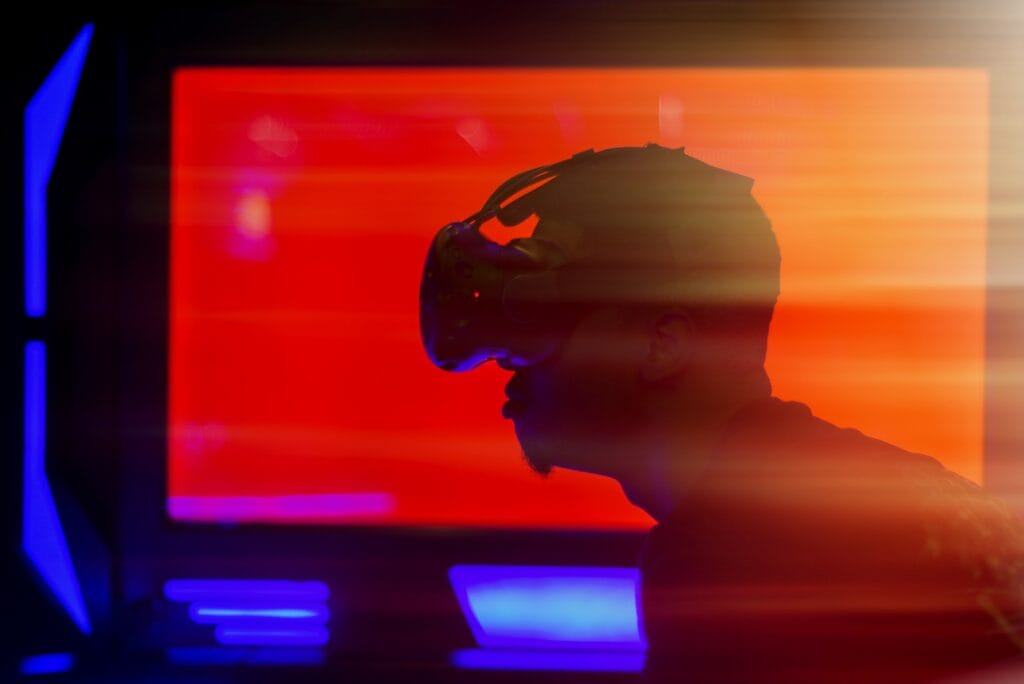
The launch of consumer VR in 2016 was accompanied by coverage suggesting that we were all about to spend most of our leisure time in virtual reality within a few years. The Oculus Rift. The HTC Vive. Big hardware comes with big price tags and big expectations. The reality came back to earth pretty quickly. The content library was thin. The setup was genuinely annoying. The cost was prohibitive for most people. The backlash was swift.
What followed was slower and less dramatic but arguably more interesting. Meta released the Quest 2 in 2020, a standalone headset with no PC required, priced at $299. It sold over 15 million units. Beat Saber reached audiences that otherwise had no particular interest in gaming. Half-Life: Alyx, released the same year, was not just a good VR game; it was a great game by any measure, and it made a genuine case that the platform could support serious creative work.
VR in 2025 has not delivered the revolution that 2016 promised. The mass-market breakthrough has not happened on the scale that early projections suggested. But it is a real, commercially meaningful segment of the market with a content library that actually justifies the hardware now. The decade laid groundwork that the next one will build on.
Cloud Gaming Quietly Changed Who Gets To Play
Cloud gaming spent most of the decade being described as the future without quite becoming the present. The pitch is simple: stream games to any device, no expensive hardware required. The execution has been harder.
Microsoft’s Xbox Cloud Gaming, Nvidia’s GeForce NOW, and Sony’s cloud offering through PlayStation Plus are all examples of cloud gaming services. All of them made genuine technical progress during this period. Latency got better. Libraries expanded. By 2024, Xbox Cloud Gaming ran across phones, tablets, smart TVs, and budget laptops, supporting hundreds of titles.
It has not replaced consoles or gaming PCs and probably will continue to do so for some time. But in markets where a gaming PC costs two months’ salary, cloud gaming opened access in a way that nothing else had. That is a big thing, even if it rarely makes headlines in Western gaming coverage.
Ten Years Later, Where Does It Leave Us?
The gaming industry in 2025 generates more revenue than the global film and music industries combined. Its biggest events draw larger simultaneous audiences than most major sports broadcasts. Its most successful independent creators reach more people than most television networks. And somewhere between 3 and 4 billion people on earth participate in it in some form.
None of this was obvious in 2015. Some of it was not even being seriously discussed.
The kid streaming to 400 people every weekend in my neighborhood is not doing something unusual anymore. He is doing something that a few hundred million people do in various forms. The gaming industry spent the last decade making that true. Whatever happens next, that part is not going back.
Frequently Asked Questions
Gaming revenue roughly doubled between 2015 and 2024, going from around $91 billion to approximately $184 billion per Newzoo. Player numbers jumped from about 1.8 billion to over 3.3 billion. Mobile drove most of that, not by converting console gamers but by finding entirely new audiences who were never going to buy dedicated hardware in the first place.
Mobile, and it is not close. Not just the revenue share, which sits near 50% of the entire global market by 2025. More importantly, who mobile actually brought in. Billions of players from demographics and regions that traditional gaming had not meaningfully reached. That is a structural shift, not just a growth number.
Cosmetics, battle passes, and seasonal content drops replaced the $60 upfront sale. For games that handled it well, the approach stretched player engagement from weeks into years. When games handled it poorly, it felt predatory, leading players to walk away. Countries have moved to regulate loot box mechanics under gambling law, and some of those conversations remain unresolved.
The debate is largely over at this point. 73 million concurrent viewers for a single tournament. Stadiums selling out. 500-plus North American universities with varsity programs. Professional athlete visas in multiple countries. Multi-year sponsorship deals from brands in fashion, automotive, and finance. The arguments against legitimacy have mostly exhausted themselves.
Not on the timeline anyone predicted. But it delivered more than the backlash suggested. The Quest 2 sold 15 million units. Beat Saber went genuinely mainstream. Half-Life: Alyx was excellent by any measure. VR is a real and growing segment in 2025, just not the dominant platform anyone forecast when the Rift first launched.
The infrastructure changed more than the talent did. Digital storefronts gave small developers global distribution without a publisher. Streaming gave them marketing they could not afford. Discord and Reddit gave them direct community access. All three shifted at roughly the same time, which is why Stardew Valley, Hades, Hollow Knight, and Celeste all found massive audiences in the same general window.
About 3.3 billion people globally. The average age in the US is around 31. Close to half of all players worldwide are women. Mobile did most of the demographic broadening by meeting people on hardware they already owned rather than asking them to buy something new. Gaming has not been a niche hobby for a while now.