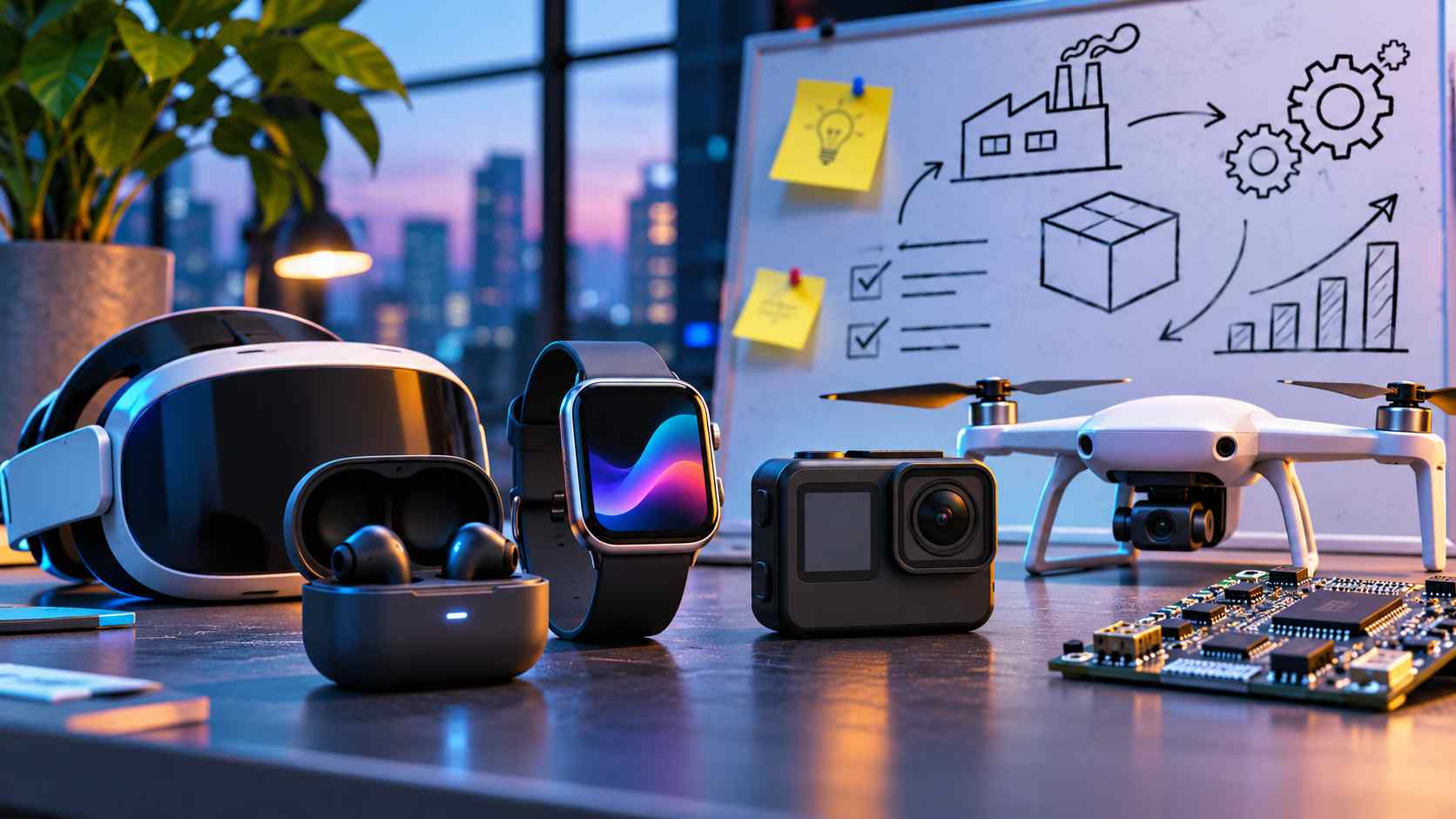
AI-generated illustration
Gadget startups get the headlines, but hardware startups pay the bills slowly. A software company can ship a fix tonight. A hardware company that gets a part wrong has a warehouse full of units to deal with.
I have no first-hand stories from running a hardware company, so this is a reading of published reporting and common sense. Whether you’re buying, building or just nosy, there’s something in here for you. Probably.
Why are hardware startups harder than software startups?
Software ships for almost nothing. Hardware doesn’t. Before a single unit sells, you’ve paid for tooling, stock, certification, freight and the returns pile nobody budgets for. And mistakes can’t be patched with an update.
Four things make it tough:
- Cash up front. Manufacturing needs deposits months before revenue.
- Slow iteration. A design change can mean new molds and weeks of waiting.
- Supply chain risk. One late component stalls a whole run.
- Thin margins. Retail partners and shipping take a big cut.
Sure, crowdfunding helps with the first problem. But crowdfunding also creates promises you must keep. If you are weighing the startup path generally, our startup founder’s guide covers the steps before you build anything physical.
Which gadget startups are worth watching?
Startup gadgets worth watching tend to solve one narrow problem. A good current example is the Index 01 smart ring from Pebble founder Eric Migicovsky’s new company. Engadget’s hands-on from CES 2026 says the ring has one button. Press it to record a spoken reminder, or to trigger an AI mode. Simple, which I like. Early bird pre-orders started at $75, and the price goes up to $100 once shipping begins in May. The battery isn’t rechargeable. It’s rated for up to three years, which is worth knowing before you pay. You can read the hands-on with the AI ring for the details.
The reviewer also found the CES prototypes didn’t connect to phones, and they felt half-finished. Honestly, that’s normal for demo units. I wouldn’t judge the ring on it, but I wouldn’t pay full price on faith either. Demo units and shipping units are different animals.
What do small hardware tech companies do differently?
Most pick one niche and stay in it. They build a small, loyal crowd first. Then they hand production to a contract manufacturer, because owning a factory is a different and much bigger bet.
Money works differently too. A lot of these companies lean on pre-orders or crowdfunding long before any investor shows up. Our guide to pre-seed to Series E funding shows where hardware slots into the usual stages. The pattern I keep noticing is this:
- Narrow focus. One product category, not a full line.
- Community first. Many of them collect fans before there’s a product, through a crowdfunding page or a plain newsletter.
- Partner factories. They hand off the building, but they keep a tight leash on quality checks.
- Software layer. An app or a subscription, so revenue doesn’t stop once the sale is done.
That software layer is where the money often is. Hardware margins are thin, so plenty of gadget startups lean on subscriptions or apps to make the numbers work. Is that good for you as a buyer? Not always. I’m wary of any device that stops working if the company folds, and I’d happily pay a bit more for something that still works offline.
How are tariffs and supply chains affecting hardware startups?
Tariffs hurt because hardware startups import parts, and lots of them. In April 2025, Sifted reported that European hardware startups were in crisis mode over US tariffs. Consumer electronics, robotics, batteries and semiconductors looked the most exposed. A 10 percent baseline tariff on goods entering the US was in place at that point.
Some founders shifted parts of their supply chains to Vietnam, India or Eastern Europe. Others cut back their US sales plans. One founder in the piece said planning had become impossible, which sounds about right to me. There’s more in this report on hardware startups and tariffs.
That reporting is over a year old now, and trade rules change fast. Check current tariffs before you build or buy anything.
What about IoT startups and robotics startup companies?
IoT startups put everyday objects online: sensors, smart plugs, and that sort of gear. Robotics startup companies build machines that move and do things, from warehouse robots to home helpers. Different products, same test. Does it keep working? Both live and die on reliability.
Many of the newest devices add AI features, and our list of the hottest AI startups shows which companies are building them. The common risk is the long tail of support. A connected device needs security updates for years. A robot needs spare parts and service. Customers remember a product that bricks itself.
Security is the part buyers forget. If a gadget joins your home network, ask one thing: how long will the maker keep patching it? No update promise means a risk. A cheap price doesn’t fix that.
How should you choose a gadget from a small brand?
Buying from a young brand can feel great when it works out. Protect yourself anyway. Read the return policy first. Then see how long the company has been shipping and what early buyers say went wrong.
- Prefer proven units. Buy something that has already shipped, not a promise on a landing page.
- Check software support. Is there an update history? A support page someone clearly maintains? If not, walk away.
- Compare against big brands. If a mainstream option costs about the same, the safe pick might just win. No shame in that.
- Pay with protection. Use a card or platform that supports disputes.
Audio is a good category to practice on, because small brands compete hard on value. Our budget earbuds under $100 guide shows how to judge them.
How do you build a gadget startup?
Start small. Before you pay for tooling, prove people actually want the thing. A rough prototype, a waiting list and a handful of honest chats will tell you more than any polished render.
Then plan for time, and then add more. Hardware almost never ships on the first date you promise. Most founders underestimate the road. Our piece on how long startup success really takes is a fair reality check.
Frequently Asked Questions
Depends on the category. I’d look for companies that solve one narrow problem, have shipped real units and still support their software.
Usually cash flow. Then supply chain trouble, tariffs, quality problems and thin margins pile on.
They carry risk. Delays and cancellations happen. Read the comments, check the team’s track record, and pay with a method that offers protection.
It swings a lot by product. Tooling, inventory and certification make it far pricier than starting a software company.
An IoT startup builds connected devices, or the software and services that run them.
Not always. Plenty start with savings, pre-orders, or crowdfunding. VC makes more sense when the product needs heavy upfront spend.
What to do next
Here’s my rule of thumb: be curious about gadget startups, but be cautious with money. Watch the ones that ship, support their software and price fairly. The best ones last longer than their launch hype. If you are building one, our incubator vs accelerator comparison shows which programs suit hardware.