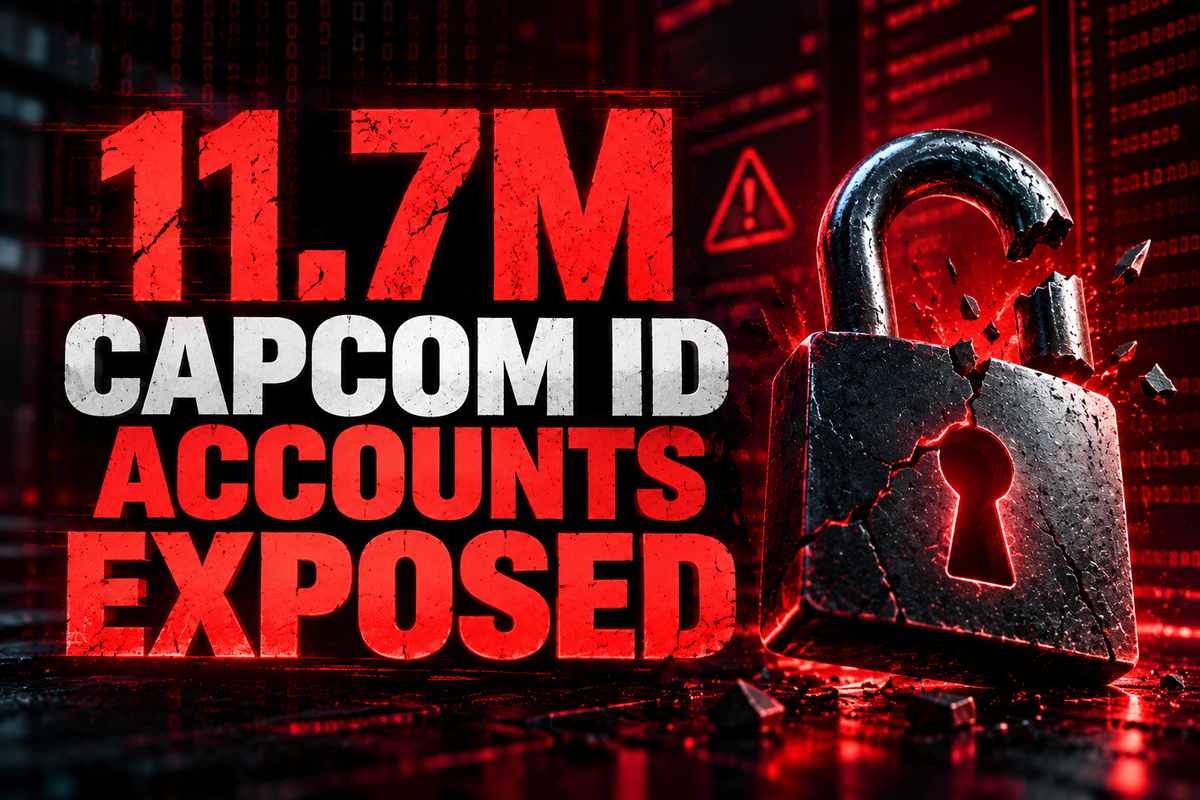
The Capcom data breach affects more than 11.7 million CAPCOM ID accounts, the company confirmed this week. CAPCOM ID is the single account players use for the publisher’s web services and some of its online games. The Japanese company says hackers got hold of customer email addresses and account activity data. Passwords and payment details were not exposed for almost every user.
If you’ve ever signed up for a CAPCOM ID, for example to play Monster Hunter, Street Fighter or Resident Evil online, here’s what you need to know.
What data was exposed
According to Capcom’s official notice, attackers accessed the following details for more than 11.7 million accounts:
- Email address
- Account creation date
- Date and time of last login
- Number of logins
- IP address used at the last login
A much smaller group got hit harder. For 43 accounts, attackers also saw the date of birth, gender, nickname and country. For 196 accounts, they changed the login password, locking the real owners out. Capcom has since reset those passwords.
What Capcom says is safe
Capcom says passwords for all other members were not exposed and credit card information was not affected. The company also says its online services are running normally, so you can keep playing.
How the breach unfolded
Capcom says it spotted suspicious activity on October 19, 2026, and confirmed someone had gained unauthorized access that day. By October 20 it had confirmed that customer information was compromised. On October 21 it reported the incident to the police and to Japan’s Personal Information Protection Commission. It went public on October 22.
Capcom says it has identified how the attackers got in and has added new security measures. It hasn’t shared technical details yet, and no hacking group has publicly claimed the attack so far.
This isn’t Capcom’s first major security incident. In 2020, the company was hit by Ragnar Locker ransomware, and it later said that attack could have affected up to 390,000 people, as reported by BleepingComputer.
What CAPCOM ID users should do now
Even though most passwords weren’t exposed, leaked emails and login history are useful to scammers. Here’s what we recommend:
- Watch out for phishing. Expect fake emails pretending to be Capcom, especially ones that ask you to “verify” your account, mention the breach, or include links and attachments. Capcom specifically warned users about messages like these.
- Go to Capcom’s site directly. Don’t click links in emails. If you want to check your account, type Capcom’s address into your browser yourself.
- Change reused passwords. If your CAPCOM ID password is also used anywhere else, change it on those sites. Attackers often pair leaked emails with passwords from older breaches.
- Turn on extra login protection wherever it’s available, especially on the email account linked to your CAPCOM ID.
- Keep an eye on your inbox. Capcom is notifying affected users in batches because of the size of the breach. It has also set up support channels for each region.
If you were one of the 196 users locked out of your account, Capcom has reset your password. Follow the official recovery steps on Capcom’s support site.
What the Capcom data breach means for gamers
The Capcom breach is the latest in a busy week for cybersecurity. Attacks are already hitting the PHP2Shell flaws in PHP, and the LiteLLM release pipeline was hijacked to spread malware.
We’ll update this story if Capcom shares more about how the attackers got in or how many users it has notified.
Source: Capcom official notice, BleepingComputer