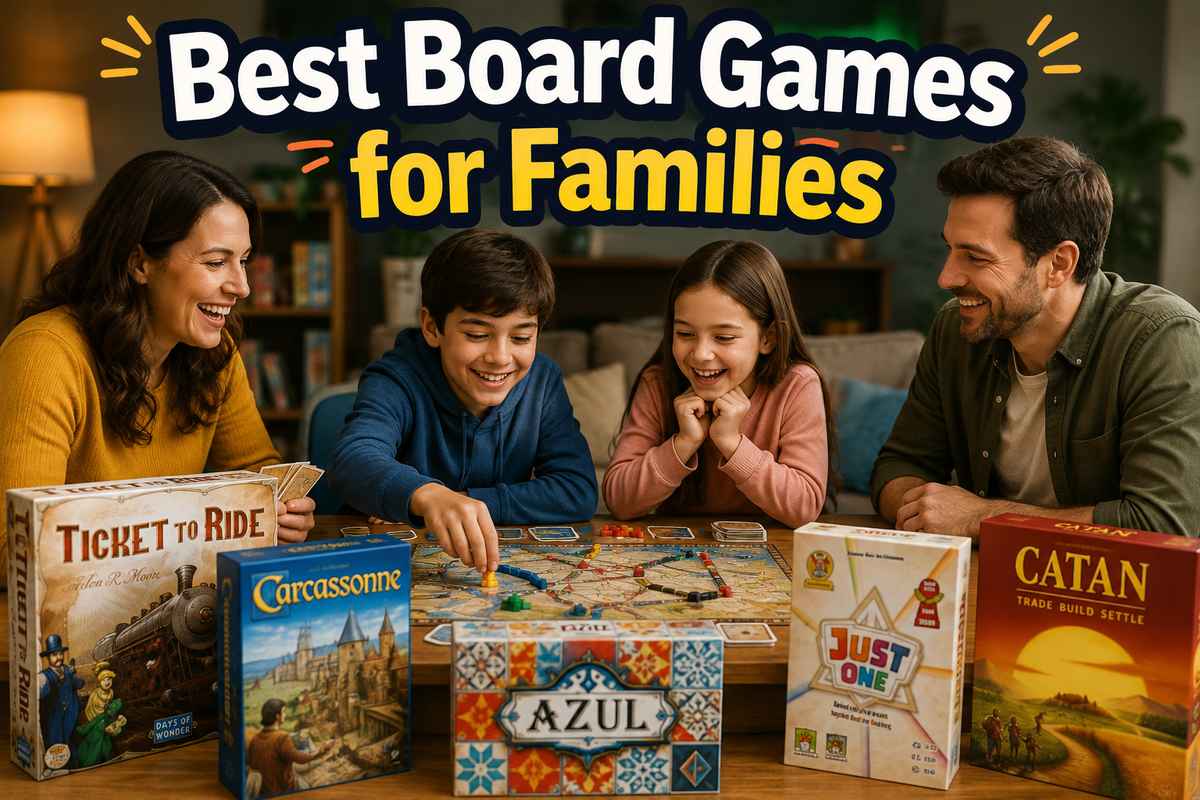

Family game night has a way of going sideways fast. Someone picks a game that’s too complicated for the youngest kid. Someone else gets bored waiting their turn. Twenty minutes in, half the table has quietly wandered off toward their phones. The fix isn’t finding one perfect game. It’s understanding that different nights call for different games and building a small shelf that covers the range.
This list focuses on games that genuinely hold up across a mixed-age table. Not just ones marketed as “family friendly” on the box, since that label gets stretched pretty thin sometimes. If your family’s more into the mobile spinoff scene these days, our Monopoly Go Tycoon Club coverage is worth a look too, though this guide sticks to games you actually set up on a table.
What Actually Makes a Game Work for Families
Before getting into specific picks, it helps to understand why some games succeed at the family table. Others quietly get shelved after one try. The best family board games for all ages tend to share a few traits. Rules that explain in under five minutes. A play time that fits an actual evening rather than eating the whole night. And critically, no single skill that lets one player dominate every round regardless of who else is at the table.
That last point matters more than people expect going in. A game built entirely around vocabulary, or one that heavily rewards adult-level thinking, tends to leave younger players checked out by round two. They stop trying, and once a kid checks out at the table, getting them back for round three is a real challenge. The strongest family games find some way to level the field instead. Sometimes that’s luck and sometimes it’s teamwork. Sometimes it’s mechanics simple enough that a seven-year-old can compete seriously against a parent without needing years of practice first.
Ticket to Ride: The Reliable Anchor
If you only own one board game as a family, Ticket to Ride is the safest single pick. It’s consistently ranked as a top choice in guides covering the best board games for family night. There’s a real reason it keeps showing up on those lists year after year. Players collect colored train cards and use them to claim railway routes across a map. The goal is working toward secret destination tickets along the way, connecting cities before an opponent blocks the route you need.
What makes it work across ages is how the complexity scales invisibly. Nobody has to dumb the game down for younger players. Younger players can focus on the simple joy of collecting cards and building routes. Adults, meanwhile, can layer in real strategic route-blocking and longer-term planning without the two experiences feeling disconnected from each other. Coop Board Games’ 2026 family rankings put it near the top of nearly every list for exactly this reason. Games typically run 30 to 60 minutes. Short enough to fit a weeknight without feeling like a commitment, long enough that it doesn’t feel over before it starts.
Codenames: Built for Bigger Groups
When more people show up, whether that’s extended family visiting or a full house on a holiday weekend, Codenames genuinely shines. Two teams compete to guess words on a shared grid based on one-word clues. One player on each team acts as spymaster, feeding hints while everyone else guesses. All while dodging the other team’s words and one game-ending assassin card.
It scales remarkably well, from four players comfortably up to a dozen or more crowded around a table. Rounds move fast enough that nobody sits out for long. Matters a lot at a big family gathering where attention spans vary wildly. The tension of giving a clue that’s too broad, or too risky, tends to produce some of the best laughs of the whole night. Half the fun is watching a perfectly reasonable clue lead your team hopelessly astray.
Cooperative Games: Playing as a Team Instead
Not every family wants competition at the table. Cooperative games solve that by putting everyone on the same side against the game itself. Titles built around shared goals, rather than head-to-head competition, tend to work especially well for families with a wide age gap. Older players can naturally guide younger ones without it feeling like they’re just letting them win out of pity.
These games also lower the emotional stakes in a way that matters more than people initially assume. Losing as a team feels a lot less painful for a young kid than losing to an older sibling directly, one-on-one. Winning together builds a different kind of memory than winning alone does. It tends to make everyone want to play again, not just whoever came out on top.
Quick Party Games for Short Windows
Sometimes there isn’t a full evening to spare. Just twenty minutes before dinner, or a lull at a family gathering while food finishes cooking. Fast, loud, reflex-based games fill that gap well, and they don’t require the setup time some of the heavier titles do. One tested roundup specifically points to reflex and reaction games as the gold standard for exactly these short windows. Titles that involve calling out words in sequence and racing to react tend to level the playing field completely. Quick reflexes matter more than strategic depth or age here, which flips the usual family game dynamic on its head.
A game that works equally well for an eight-year-old and a grandparent, purely on reaction speed rather than experience, is genuinely rare. Worth having one on the shelf specifically for those short windows when a full game just isn’t in the cards.
Choosing the Right Game for Your Family
The best board game for family situations really comes down to matching the game to the moment. There’s no single universal winner that fits every occasion, no matter what any one ranking claims. A big holiday gathering calls for something like Codenames that scales to a crowd without leaving anyone bored on the sidelines. A quiet weeknight favors a shorter, calmer game instead. A family with a big age gap between kids benefits from cooperative options. Nobody pressures the youngest player to perform at everyone else’s level.
The best board games for families of all ages ultimately mean building a small rotation. Two or three well-chosen games, each suited to a different kind of evening, get far more table time over a year. A single expensive game that fits only one mood can’t compete with that.
Final Thoughts
The best family game night doesn’t come from finding the single most acclaimed board game on the market. It comes from matching the right game to the right moment. The right group size, the right energy level in the room that particular night. Start with something reliable like Ticket to Ride. Add a party game for bigger groups. Round it out with a cooperative title for nights when everyone just wants to work together instead of compete against each other. That small rotation will outlast almost any single blockbuster purchase sitting unplayed on a shelf.