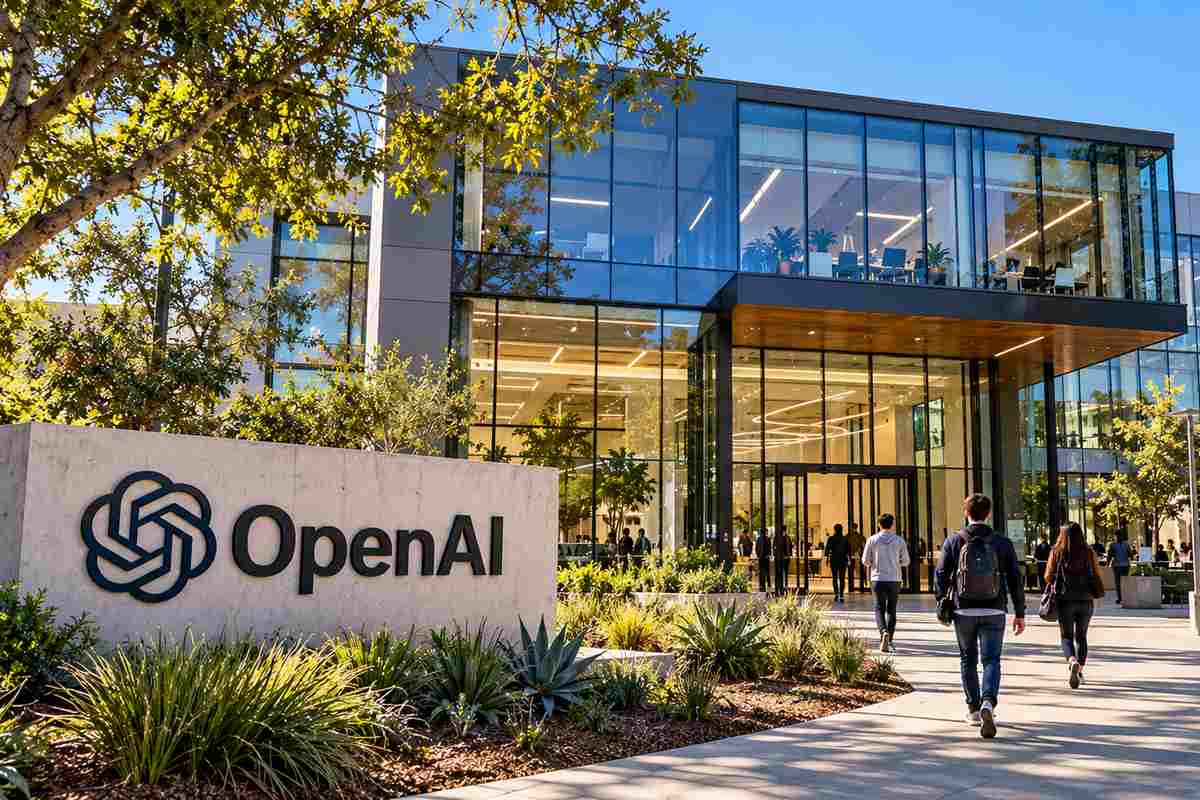

I went looking for the OpenAI headquarters address a while back and found three different answers. Old directory sites still list a small building in the Mission District. Newer ones point to Mission Bay. A couple just say “San Francisco” and leave it there.
The truth is a bit messier and, honestly, more interesting. The company behind ChatGPT has moved, expanded, and then expanded again, and it now runs one of the biggest office footprints in the city. If you’re curious about where it actually sits, or you’re thinking about applying, here’s what I found.
Where Is OpenAI Based?
Short answer: San Francisco. Specifically, the Mission Bay neighborhood, on the east side of the city near the Chase Center and the UCSF campus.
The main address is 1455 and 1515 Third Street. Those are two connected buildings that Uber used to occupy. OpenAI took them over in 2023, and that’s what most people mean today when they talk about the OpenAI location.
There’s a catch, though. OpenAI no longer fits in those two buildings. It has spread across several properties in Mission Bay, so “headquarters” is really a cluster of offices within walking distance of each other rather than one tower with a logo on top. Which, if you think about it, is kind of how a company that grew this fast was always going to end up.
The Old Pioneer Building Days
Before Mission Bay, the company had a much smaller home. In 2016, OpenAI moved into the Pioneer Building at 3180 18th Street in the Mission District. It’s a converted old building, nothing flashy. That’s the address you’ll still see on outdated company directories.
Before that, the early team reportedly worked out of co-founder Greg Brockman’s apartment. Hard to picture now, given what the Open AI headquarters looks like today.
Here’s the thing: the old address stuck around online long after the company left. So if you’re planning a visit based on an old listing, you’ll end up outside the wrong building.
How OpenAI Took Over Mission Bay
The move to Mission Bay happened in stages, and each one was a big deal for the local office market.
- The Uber sublease (2023). OpenAI took nearly 500,000 square feet across the two Third Street buildings. San Francisco hadn’t seen an office deal that size since 2018, as this report on the Mission Bay deals points out.
- 550 Terry A. Francois Boulevard (2024). Less than a year later, it leased the entire 315,000-square-foot building there. That was one of the city’s largest office deals of 2024.
- 1800 Owens Street (2026). The former Dropbox headquarters complex sits about half a mile away. OpenAI subleased roughly 280,000 square feet there in March 2026.
Sure, these are just real estate numbers. But they tell you something about scale. The company had around 4,500 employees in 2026, and it keeps signing space faster than most tech firms in the city.
Over a Million Square Feet
After the Dropbox deal, OpenAI’s office footprint in San Francisco passed 1 million square feet, all of it in Mission Bay. That’s a remarkable number in a city where plenty of downtown towers still sit half empty.
There’s also talk of a Silicon Valley campus further south. I’d treat that as a work in progress for now.
What the OpenAI Headquarters San Francisco Campus Is Like
I’ll be upfront: I haven’t been inside, and neither have most people. It isn’t a tourist spot. There are no public tours that I know of, and security is tight, which makes sense given what they’re building.
What I can tell you is the vibe of the area. Mission Bay is newer and cleaner than most of San Francisco. Lots of glass, waterfront paths, and biotech labs slowly turning into tech offices. It’s a very different feel from the gritty Mission District where the company started.
The neighborhood has also turned into a magnet for AI companies. Plenty of the hottest AI startups have offices within a short ride. Thinking Machines Lab, founded by former OpenAI CTO Mira Murati, moved into a Mission District office in August. Mission Bay is sort of becoming the AI district, whether the city planned it or not.
OpenAI Offices Outside San Francisco
The OpenAI office San Francisco campus is the center of everything, but it’s not the only one anymore. Over the last couple of years the company has opened or announced offices in New York, Seattle, London, Dublin, Tokyo, Paris, Brussels, Singapore, Munich, Seoul and Sydney.
London is the big one outside the US. In April 2026, OpenAI signed a lease for 88,500 square feet in King’s Cross, with room for up to 544 people. It’s expected to open in 2027.
India Gets Its Own Offices
This bit matters for a lot of Technwz readers. OpenAI opened its first permanent office in India in New Delhi, and it has said Mumbai and Bengaluru are planned for later in 2026.
Most of the roles there aren’t research, though. They’re solutions engineers, deployment engineers and sales roles. Basically, people who help companies roll out enterprise AI agents built on ChatGPT and the API. Still, if you’re in India and want to work for OpenAI, that door is a lot more open than it was two years ago.
Can You Work Remotely at OpenAI?
Not really. If you’re hoping for openai careers remote listings, you’ll find very few.
The standard setup is hybrid: in the office Monday through Wednesday, with Thursday and Friday flexible. One count of open roles earlier this year found only about 4% listed as remote, and most of those were US-only. Sam Altman has been openly skeptical of remote work since at least 2023, and the policy reflects that.
So in a nutshell, you’ll need to live near an OpenAI office. For most roles, that still means the Bay Area.
The OpenAI Internship and Residency Programs
For students, the OpenAI internship is the main way in. Most tracks run about 12 weeks and happen on-site in San Francisco. The OpenAI SWE intern track is the most competitive one, and one recent guide put its pay at around $60 an hour. I’d treat exact pay figures as approximate, since they shift every year.
Being an Open AI intern also means sticking to the same hybrid schedule as full-time staff. No remote interns, as far as I can tell.
Then there’s the Residency, which people often confuse with an internship. It isn’t one. It’s a six-month, full-time program for people moving into AI from other fields, like physics, math or self-taught engineering. Residents get a full salary, reportedly about $18,300 a month, and strong performers can get full-time offers at the end.
The catch? You can’t be enrolled in school, and it’s based at the San Francisco HQ only. Applications for the 2026 Residency have already closed.
What Employees Say About Working There
OpenAI Glassdoor reviews paint a pretty consistent picture. People love the mission, the talent around them and the pay. They’re less thrilled about the pace.
One roundup put OpenAI’s work-life balance score at about 3.6 out of 5. That’s not terrible. But for a company paying at the top of the market, it tells you the hours are long and the pressure is real.
To illustrate, a lot of reviews describe the same trade-off. You’re working on technology millions of people use every day, and that’s exciting. You’re also shipping constantly, with very little downtime between launches.
Is it worth it? Depends on what stage of life you’re in, honestly. I think I’d have jumped at it at 24. Now I’m less sure.
Where OpenAI Goes From Here
The company keeps growing, and so does its office map. With a fresh funding round reportedly in the works and an eventual IPO on the horizon, which I covered in my piece on Scale AI stock, more space seems almost guaranteed.
My guess is Mission Bay stays the heart of it for years. The OpenAI headquarters isn’t moving anywhere soon. But the next big hiring waves will probably happen in London and India, not San Francisco.
If you’re planning to apply, that’s worth keeping in mind.